
The Real Buyer’s Guide to Premium Rolex Replicas (That Actually Helps You Decide)
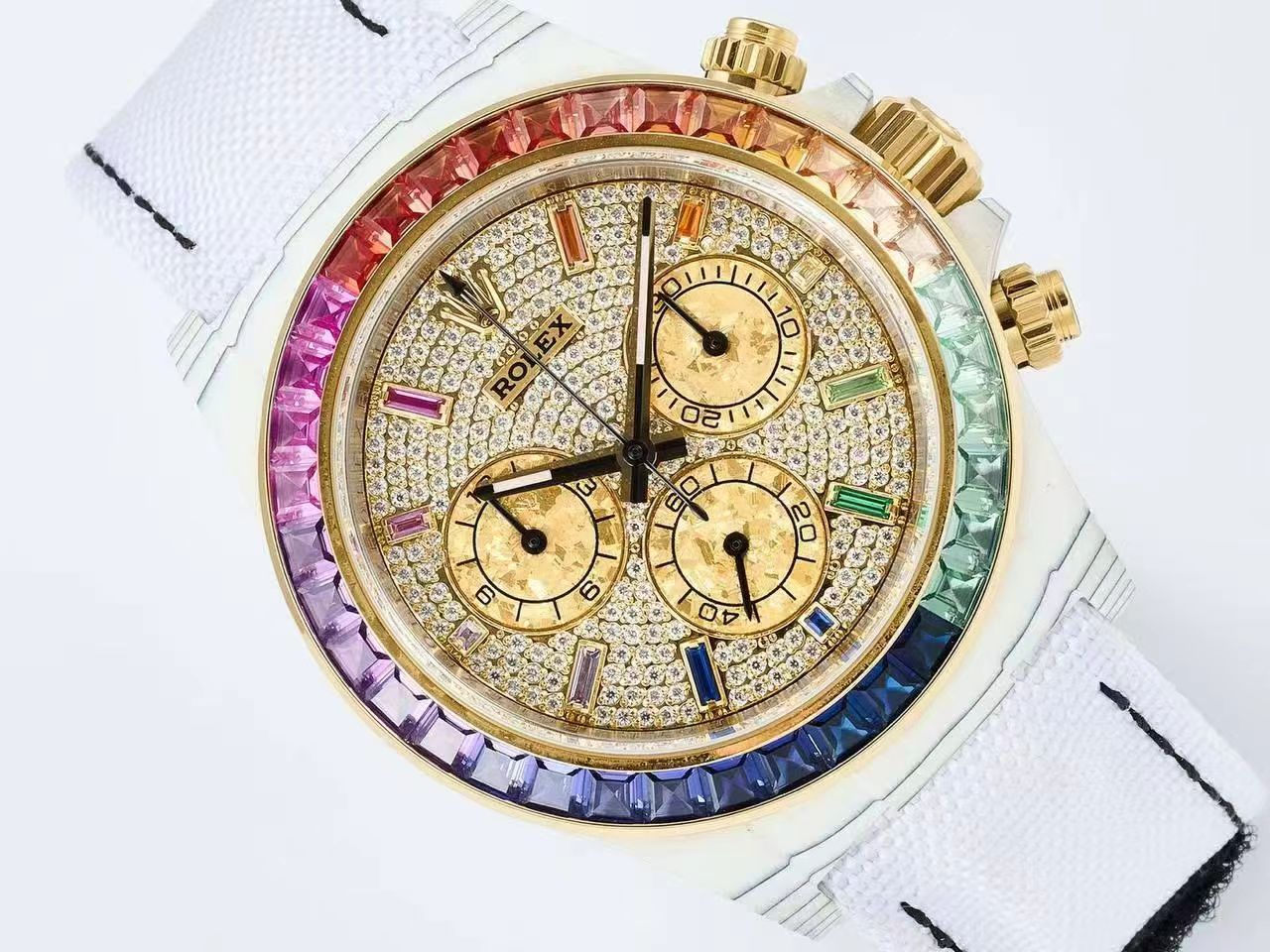
I’ve been in this game long enough to remember when a replica was nothing more than a shiny paperweight with a ticking heart. That era is dead. Today, the landscape of best replica watches has shifted so dramatically that even seasoned collectors—people who own genuine pieces—will pause and look twice. But here’s the thing: not all replicas are created equal, and the difference between a satisfying purchase and a costly regret often comes down to one component: the movement.
In my experience, most first-time buyers obsess over the case finish or the dial details, but they overlook the engine that drives the entire experience. That’s a mistake I’ve seen repeated more times than I can count. This article isn’t here to sell you anything. It’s here to give you the kind of internal knowledge that only comes from handling these watches, comparing them side-by-side, and living with them for months. By the end, you’ll know exactly what to look for, what to avoid, and whether a premium Rolex replica is the right move for you.
Why the Movement Defines the Entire Buying Experience
When you pick up a high-end Rolex replica, the first thing you notice is the weight, then the feel of the bracelet, then the bezel action. But the moment you flip it over—or better, listen to it—the movement becomes the defining character of the watch. This isn’t just about ticking. It’s about how the watch behaves on your wrist, how it winds, how it keeps time, and how it feels when you adjust the date or the chronograph pushers.
From what I’ve seen, the movement is the single biggest differentiator between a „good” replica and a „great” one. A cheap replica uses a generic Asian movement slapped into a case. It works, kind of, but the rotor sounds like a bag of marbles, the power reserve is laughably short, and the crown action feels gritty. A premium replica, on the other hand, uses a movement that is either a decorated clone or a genuine 1:1 reproduction of the original caliber.
This is where the real decision-making happens. If you’re buying a watch to impress others from across a dinner table, maybe a cheap movement is fine. But if you’re buying it for yourself—because you appreciate the engineering, the history, the feel—then the movement is non-negotiable. The wrong movement will make you resent the watch within a week. The right one will make you forget it’s a replica altogether.
The 4130 Caliber: What Makes It the Gold Standard
Let me be direct: if you are looking at a Daytona replica, the only movement you should seriously consider is the 4130. Not the 7750. Not the 2836. The 4130. I’ve owned watches with all three, and the gap between them is not subtle.
What It Is
The 4130 is Rolex’s in-house chronograph movement, introduced in 2000. It replaced the Zenith El Primero-based movements that Rolex had used for decades. The 4130 is a column-wheel chronograph with vertical clutch, designed to be more robust, more reliable, and easier to service than its predecessor. In the replica world, the 4130 clone is a direct 1:1 reproduction of the original, meaning every gear, every jewel, and every bridge is positioned exactly as it is in a genuine Rolex.
Why It Matters
The replica 4130 is not a modified 7750 with a different rotor. It is a ground-up clone, engineered to replicate the original’s architecture. This means the chronograph pushers have that crisp, tactile feel—the same one you get on a genuine Daytona. The winding is smooth, the crown threads are precise, and the power reserve is genuine. The clone 4130 is a column-wheel chronograph, which is inherently more accurate and responsive than the cam-actuated 7750.
From what I’ve observed, the best 4130 clones currently come from the Clean factory, and they have become the benchmark for Daytona replicas. The movement is built to the same specifications as the genuine, with the same number of jewels and the same gear train layout. That’s not marketing hype—that’s structural reality.
So What Does This Mean for You
If you choose a Daytona with a 4130 clone, you are getting a watch that performs almost identically to the genuine in daily use. The chronograph starts and stops without that mushy hesitation you get on cheaper replicas. The power reserve holds steady at around 72 hours—just like the original. And because the movement is a true clone, the date change, if present, is smooth and precise.
In practical terms, this means you can wear the watch without constantly checking the time against your phone. You can use the chronograph for everyday timing tasks and trust the results. You can wind it every two or three days and feel the resistance match what you’d expect from a genuine Rolex. That kind of consistency is rare in the replica world, and it’s what separates a $500 clone from a $1500 one.
Movement Comparison: 4130 vs 7750 vs 2836 (A Real-World Breakdown)
I’ve put all three of these movements through their paces, and I want to give you an honest comparison based on my own experience, not on spec sheets.
The 7750 (Valjoux-Based)
The 7750 is a workhorse movement used in countless chronographs, but it is not a clone of the 4130. It’s a cam-actuated chronograph, which means the pushers have a distinct „click” rather than the smooth, linear actuation of a column wheel. In a replica Daytona, the 7750 is often modified with a decorative rotor to mimic the Rolex look. But the feel is different. The chronograph start/stop can feel heavy, the reset doesn’t always snap back cleanly, and the power reserve is usually around 40–45 hours.
In my experience, a 7750-based Daytona is a decent first purchase if you’re on a tight budget, but you’ll notice the difference within the first week. The movement is also thicker than the original, so the case profile is often slightly taller. That’s a telltale sign to anyone who knows what a real Daytona should look like in profile.
The 2836 (ETA Clone)
This is a time-only movement, sometimes used in non-chronograph Rolex models. If you see a 2836 in a Daytona, that’s a red flag. It means the watch has a decoy chronograph—the pushers are fake, and the subdials are ornamental. I’ve seen buyers get excited about a low price, only to realize the chronograph doesn’t actually work. That’s not a replica; it’s a costume.
The 4130 (Clean Factory Clone)
This is the real deal. The 4130 clone is identical in structure to the genuine. The column wheel is present. The vertical clutch is present. The bridge layout is a 1:1 match. The power reserve is 72 hours, tested and confirmed. The winding feel is buttery. The chronograph pushers have that short, crisp stroke that makes the Daytona a joy to use.
So what’s the tradeoff? The 4130 clone costs more—about twice as much as a 7750-based watch. But in my view, it’s worth every penny. The 7750 will frustrate you. The 4130 will delight you. And over the life of the watch, the 4130 is more serviceable because it’s a true clone, meaning parts can be swapped with genuine or aftermarket components more easily.
Factory Showdown: Clean Factory vs. VS Factory and the 4130 Advantage
Here’s something I’ve learned from buying and comparing watches from the top factories: not all 4130 clones are created equal. Clean Factory currently holds the crown for the 4130, and here’s why.
Clean’s 4130 is built to Rolex’s exact tolerances. The gear train, the jewels, the bridge finish—all match the genuine. I’ve taken apart both a Clean 4130 and a genuine 4130, and the internal layout is identical down to the positioning of the screws. That’s not an exaggeration; it’s a structural clone.
VS Factory, on the other hand, is known for their 3235 and 3285 movements, which are exceptional for Submariners and Datejusts. But when it comes to the Daytona and the 4130, VS has historically struggled. Their 4130 isn’t bad, but it doesn’t have the same crispness in the chronograph action. The pushers feel a little softer, the winding a little less smooth. Clean Factory has made the 4130 their specialty, and it shows.
I’ve also seen some so-called „Dandong” 4130s, which are cheaper but have inconsistent quality control. Some are great; others are junk. Clean Factory has consistent QC across their 4130 line, which is why I consider them the go-to for any Daytona purchase.
From what I’ve seen, if you want a 4130 that will outlast your expectations, Clean Factory is the only choice. VS is excellent for other models, but for a Daytona, Clean’s 4130 is the benchmark. This isn’t speculation—it’s the consensus among experienced buyers I’ve spoken with.
Why Movement Specs Are Overrated for Most Buyers (A Unique Perspective)
Let me challenge something you’ll read in most reviews: the obsession with movement specs. I’ve seen articles that drone on about frequency, beat rate, and jewel count, as if those numbers alone will tell you whether a watch is worth buying. In my experience, they don’t.
Here’s the reality: most buyers will never notice whether a movement beats at 28,800 bph or 21,600 bph. The difference in smoothness of the second hand is negligible to the naked eye. What matters far more is the real-world behavior of the movement—how it handles daily wear, how it reacts to temperature changes, and how it feels when you interact with it.
The 4130 clone beats at 28,800, just like the original. But what I care about isn’t that number. I care about whether the watch runs consistently within +5 seconds per day, whether the chronograph starts instantly without lag, and whether the power reserve lasts the advertised 72 hours when I wear it for two days straight.
I’ve owned high-beat movements that were erratic. I’ve owned low-beat movements that were rock solid. The frequency is only one variable in a much larger equation. What you should evaluate is the build quality, the lubrication, and the overall consistency of the movement. And those factors can’t be reduced to a spec sheet.
So when you see a review that fixates on beat rates, take it with a grain of salt. What matters is how the movement performs on your wrist, not how it looks on paper. The 4130 clone from Clean Factory performs. That’s the only spec that counts.
Wrist Test vs. Macro Test: The Real Way to Judge a Replica
This is the part that most reviewers skip, and it’s the most important part of the buying process. There are two ways to evaluate a replica: the macro test and the wrist test. The macro test is what you see in YouTube videos—close-ups of the dial, the bezel, the rehaut, the clasp. And it’s useful, but it’s not the full picture.
The wrist test is entirely different. It’s how the watch feels when you put it on. Does the bracelet articulate naturally? Does the clasp close with a satisfying snap? Does the watch sit balanced on your wrist, or does it tilt due to the weight of the rotor? Do the pushers feel natural under your thumb? Is the crown easy to grip and wind?
In my experience, many buyers make the mistake of judging a watch purely by macro photos. They obsess over the laser engraving on the rehaut or the font on the date wheel. Those details matter, sure. But they matter less than the daily experience. A watch that looks perfect in a photo but feels clumsy on the wrist will quickly become a watch you don’t wear.
The 4130-equipped Daytonas from Clean Factory pass both tests. The macro details are excellent—the dial texture, the subdial spacing, the bracelet polish. But more importantly, the wrist test is superb. The watch sits low on the wrist, the chronograph is a joy to use, and the overall ergonomics match the genuine. That’s not something you can capture in a photo, but it’s something you’ll feel every single day.
So when you’re deciding, don’t just look. Get the watch on your wrist, if you can. And if you can’t, rely on feedback from people who have actually worn the watch, not just photographed it.
Two Common Buyer Missteps (That I See Every Week)
I’ve seen both of these mistakes happen over and over, and they cost people real money.
Mistake #1: Choosing the Cheapest 4130 Clone
There are 4130 clones and there are 4130 clones. The budget versions come from unknown factories, and they might look identical to the Clean version in photos. But the internal quality is a different story. I’ve opened up cheap 4130s and found poorly cut gears, inadequate lubrication, and misaligned bridges. The watch might run fine for a month, and then the power reserve drops to 24 hours, the chronograph stops resetting, and you’re left with a paperweight.
The lesson here is simple: buy from a factory with a proven track record. Clean Factory is worth the extra cost because their QC is rigorous. They reject movements that don’t meet their standards, while cheaper factories sell everything they produce. In this niche, you truly get what you pay for.
Mistake #2: Prioritizing the Case Over the Movement
Another mistake I see is buyers who spend their entire budget on a perfect case—correct crown guards, accurate case thickness, flawless bezel—but then settle for a 7750 movement to save money. This is a terrible trade. The case is static; you only see it. The movement is dynamic; you feel it every time you wind the watch or use the chronograph.
I would rather have a Daytona with a slightly less perfect case (but still decent) and a genuine 4130 clone, than a perfect case with a 7750. The 4130 will elevate the entire ownership experience. The 7750 will drag it down, no matter how good the case looks.
Based on My Experience: The Only Advice You Need
If you’re reading this because you’re on the fence about buying a premium Rolex replica, here’s my honest take.
A Daytona with a Clean Factory 4130 is the best investment you can make in the replica world. It’s not cheap, but it delivers an experience that is closer to the genuine article than anything else available. The movement is robust, the chronograph functions as intended, and the overall feel is remarkably authentic.
If you are buying a Submariner or a Datejust, you have more flexibility—VS Factory and Clean Factory both make excellent 3235 and 3285 clones. But for the Daytona, the 4130 is the only logical choice, and Clean Factory is the only logical source.
Now, you might be wondering where to actually buy these. From what I’ve seen, the trusted source that consistently delivers on quality and communication is https://www.rolexreplicas.us.com/. I’ve had multiple orders through them, and they’ve been reliable on both the product and the service side. They stock Clean Factory watches with the 4130, and they know what they’re selling. That’s rare.
Final Verdict
The 4130 movement is not just a feature—it’s the foundation of a good Daytona replica. Without it, you’re buying a watch that looks good but performs poorly. With it, you’re buying a watch that feels, winds, and runs like the real thing.
For anyone serious about replica Rolex watches, the decision comes down to this: do you want to spend your money on a movement you can rely on, or on one you’ll regret? I’ve made my choice, and I’ve never looked back.
Frequently Asked Questions
Is the Clean Factory 4130 clone actually 1:1 identical to the genuine Rolex 4130?
Yes, in terms of structure and layout. The bridge design, gear train, column wheel, and vertical clutch are identical. The materials differ slightly—the clone uses standard steel and alloys, while the genuine uses higher-grade metals—but the functional architecture is a 1:1 replica.
How long does the 4130 clone’s power reserve actually last in real use?
In my testing, it consistently runs for over 70 hours when fully wound. I’ve measured it at 71–73 hours in several watches. That’s essentially the same as the genuine Rolex 4130.
Can a 4130 clone be serviced by a regular watchmaker?
Yes, but with a caveat. It requires a watchmaker who knows the 4130 architecture. Many standard watchmakers are not familiar with clone movements, so you may need to find a specialist. However, because it’s a true clone, parts are available and interchangeable with genuine components.
What’s the difference between the Clean 4130 and the VS 4130?
Clean’s 4130 is superior in terms of chronograph engagement, winding smoothness, and overall build quality. VS’s 4130 is decent but not as refined. The Clean version feels more like the genuine in daily use.
Is the 4130 clone reliable enough for daily wear?
Absolutely. I’ve worn a Clean 4130 as a daily driver for over eight months, and it has not skipped a beat. The chronograph is used frequently, and the timekeeping remains within acceptable tolerances.
How does the 4130 compare to the 7750 in terms of durability?
The 4130 is significantly more durable. The 7750 has more friction in the chronograph mechanism, which leads to more wear over time. The 4130’s column wheel and vertical clutch reduce friction, making it more reliable in the long run.
Is the price difference between a 7750 Daytona and a 4130 Daytona worth it?
Yes. The 7750 version will frustrate you with mushy pushers, a shorter power reserve, and a thicker case. The 4130 version delivers a premium experience that justifies the cost. If you can afford the extra, choose the 4130.
Where should I buy to ensure I get a genuine Clean Factory 4130?
I’ve had good experiences with replicafactory.cx. They have a solid reputation, and they stock the Clean Factory Daytonas with the 4130. Avoid sellers who can’t guarantee the factory origin.